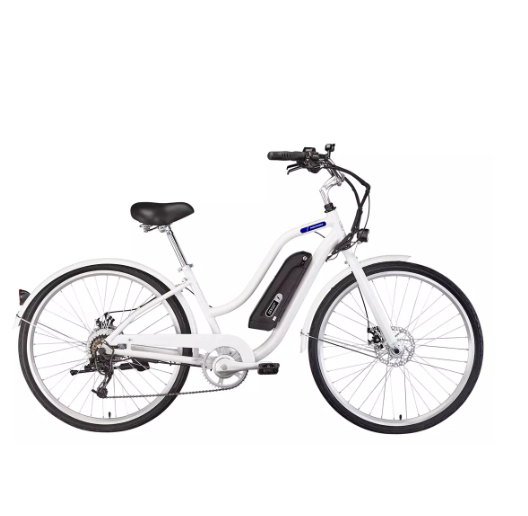
Nishiki Women’s Escalante Electric Comfort Bike
- Motor Wattage: 350
- Battery Type: 36v Lithium Ion
- Shifters: 7-speed, S-Ride Thumb Shifter
From Classic Steel to Electric Steel: How Nishiki is Electrifying the Modern Cycling Experience
The morning mist clings to the asphalt as Sarah pushes off from her driveway, feeling the familiar weight of her bicycle beneath her. But this isn’t just any bicycle—it’s her Nishiki electric bike, and as she gently engages the pedal assist, she feels that magical moment when human power meets electric innovation. The hill that once left her breathless now becomes a gentle slope, conquered with a smile instead of sweat.
This is the modern cycling revolution, and Nishiki—a brand with deep roots in cycling history—has stepped boldly into the electric future. But what makes a Nishiki electric bike worth your consideration in a market flooded with e-bike options? Let’s embark on a comprehensive journey through everything you need to know about these electrified machines.
The Nishiki Legacy Meets Electric Innovation
Does Nishiki make electric bikes? The answer is a resounding yes, though it’s worth understanding the context behind this evolution. Nishiki, originally a Japanese brand that gained prominence in the American market through partnerships with major retailers, has undergone significant transformations over the decades. Today, the Nishiki name continues to represent accessible, reliable cycling solutions, and their entry into the electric bike market reflects the brand’s commitment to staying relevant in an evolving industry.
The transition from traditional bicycles to electric ones wasn’t just a business decision for Nishiki—it was a recognition that cycling itself was changing. Modern riders want the freedom to go further, climb higher, and arrive fresher than ever before. They want to rediscover the joy of cycling without the physical limitations that might have previously held them back.
When Nishiki embraced electric technology, they brought with them decades of understanding about what everyday cyclists actually need: reliability, affordability, and functionality. These aren’t bikes designed for professional racers or extreme mountain adventurers—they’re designed for real people living real lives who want to incorporate cycling into their daily routines.
Unpacking the Features: What Makes a Nishiki Electric Bike Tick
What are the features of a Nishiki electric bike? To answer this question properly, we need to understand that Nishiki doesn’t just slap a motor onto an existing frame and call it electric. Their approach to e-bike design considers the complete riding experience.
The heart of any Nishiki electric bike lies in its integration of traditional cycling mechanics with modern electric assistance. Most models feature aluminum frames that strike a balance between durability and weight management. The geometry tends to favor comfort over aggressive performance positioning, making these bikes accessible to riders who might be intimidated by more racing-oriented designs.
The electrical components are where things get interesting. What type of motor does the Nishiki electric bike have? Typically, you’ll find hub motors in Nishiki’s electric lineup, usually positioned in the rear wheel. These motors are known for their simplicity and reliability—they’re less complex than mid-drive systems, which means fewer things can go wrong and maintenance tends to be more straightforward.
Hub motors also provide a different riding feel compared to mid-drive systems. When you engage the motor, you feel a direct push from behind rather than the sensation of your own pedaling being amplified. Some riders prefer this feeling because it clearly distinguishes between their own effort and the bike’s assistance.
The control systems on Nishiki electric bikes typically feature LCD displays that show essential information like battery level, speed, and assistance mode. The interfaces are designed to be intuitive rather than overwhelming—you won’t find yourself scrolling through dozens of settings or trying to decipher complex menus while riding.
Does the Nishiki electric bike have pedal assist and throttle modes? This depends on the specific model, but many Nishiki e-bikes offer both options. Pedal assist (also called PAS – Pedal Assist System) provides motor support only when you’re actively pedaling, with multiple levels of assistance that you can adjust based on terrain and desired effort level. Throttle mode allows you to engage the motor without pedaling, essentially turning your bike into an electric scooter when needed.
The beauty of having both systems is flexibility. You might use pedal assist for most of your ride to maintain that authentic cycling feel while getting help on hills, then switch to throttle mode when you need to quickly accelerate from a traffic light or when you’re simply too tired to pedal.
The Economics of Electric: Understanding Nishiki E-Bike Pricing
How much does a Nishiki electric bike cost? This question often determines whether someone takes the next step from curiosity to ownership. Nishiki has positioned itself in the accessible segment of the e-bike market, typically offering models in the $800 to $1,500 range, though prices can vary based on features and retailer.
This pricing strategy reflects Nishiki’s understanding of their target market. These aren’t bikes for enthusiasts with unlimited budgets—they’re for commuters, recreational riders, and people who want to try electric cycling without making a massive financial commitment. When you compare this to premium e-bike brands that can easily cost $3,000 to $5,000 or more, the value proposition becomes clear.
However, it’s important to understand what you get for this price point. Nishiki electric bikes typically offer solid basic functionality rather than cutting-edge technology. The components are chosen for reliability and cost-effectiveness rather than maximum performance. This doesn’t mean they’re inferior products—it means they’re designed with different priorities.
The frame materials, while durable, might not be as lightweight as more expensive options. The electrical components are reliable but might not offer the same range or power as premium systems. The accessories and finishing touches might be more basic. But for many riders, these trade-offs are perfectly acceptable given the significant cost savings.
Consider Sarah from our opening story. She needed a bike that would get her to work reliably and help her tackle the hills in her neighborhood. She didn’t need the latest carbon fiber frame or the most powerful motor on the market. A Nishiki electric bike gave her exactly what she needed at a price that didn’t require her to raid her retirement savings.
Finding Your Electric Companion: Where to Buy
Where can I buy a Nishiki electric bike? The distribution strategy for Nishiki e-bikes reflects the brand’s focus on accessibility. You’ll typically find these bikes through major retail chains, online marketplaces, and some independent bike shops that carry the brand.
The advantage of this broad distribution network is convenience and support. If you buy from a major retailer, you often have access to assembly services, basic maintenance support, and straightforward return policies. Online purchases can offer competitive pricing and detailed reviews from other customers.
However, this distribution approach also means that the buying experience might be different from what you’d get at a specialized e-bike shop. You might not have access to extensive test rides or highly specialized knowledge about electric bike systems. The trade-off is between specialized service and broad accessibility.
When shopping for a Nishiki electric bike, consider visiting a physical location if possible, even if you plan to buy online. Being able to sit on the bike, check the fit, and get a feel for the controls can be invaluable. Electric bikes have different weight distributions than traditional bikes due to the motor and battery, so a physical test can reveal important comfort and handling characteristics.
Perfect for Beginners: The Approachable Electric Experience
Are Nishiki electric bikes good for beginners? This might be one of the most important questions for many potential e-bike owners. The transition from traditional cycling to electric cycling can feel overwhelming, and choosing the right first e-bike can make the difference between falling in love with electric cycling or feeling frustrated by complexity.
Nishiki electric bikes excel in the beginner-friendly category for several reasons. First, their control systems are typically straightforward and intuitive. You don’t need to understand complex electrical systems or memorize numerous settings. The basic operation—turn on the bike, select your assistance level, and start pedaling—is simple enough that most people can master it within minutes.
The power delivery from hub motors tends to be smooth and predictable, which helps new riders build confidence. Unlike some more powerful systems that can deliver sudden bursts of power, Nishiki electric bikes typically provide assistance that feels natural and controlled. This makes them ideal for riders who might be nervous about handling a powerful electric motor.
The weight and geometry of these bikes also contribute to their beginner-friendliness. While they’re heavier than traditional bikes due to the motor and battery, they’re generally lighter than many high-end e-bikes with larger batteries and more powerful motors. This makes them easier to handle when the motor isn’t engaged and less intimidating overall.
For someone like Tom, a 55-year-old who hadn’t ridden a bike in decades but wanted to start commuting to work, a Nishiki electric bike provided the perfect entry point. The assistance gave him confidence to tackle traffic and hills, while the straightforward operation meant he could focus on rebuilding his cycling skills rather than wrestling with technology.
Power and Performance: Understanding the Motor System
The motor system is the heart of any electric bike, and understanding how it works in a Nishiki electric bike helps set proper expectations for performance and capability. As mentioned earlier, most Nishiki e-bikes use hub motors, typically located in the rear wheel.
What type of motor does the Nishiki electric bike have? The specific motor type and power output can vary between models, but you’ll typically find brushless hub motors in the 250W to 500W range. These motors are designed to provide assistance rather than replace pedaling entirely, which aligns with the philosophy of electric bikes as pedal-assist vehicles.
The advantage of hub motors lies in their simplicity and reliability. They have fewer moving parts than mid-drive systems, which typically means less maintenance and fewer potential failure points. They also don’t put additional stress on your bike’s chain and gears, since they provide power directly to the wheel rather than through the drivetrain.
However, hub motors do have some limitations compared to mid-drive systems. They don’t benefit from your bike’s gearing system, which means they might be less efficient on steep hills or at very high speeds. They also add weight to the wheel, which can affect handling, particularly when maneuvering the bike at low speeds or when carrying it.
For most riders, these trade-offs are perfectly acceptable. How does the Nishiki electric bike perform on hills? With a properly functioning hub motor and adequate battery charge, moderate hills become much more manageable. You won’t be racing up mountain passes, but typical suburban and urban inclines that might have previously forced you to walk your bike become rideable with assistance.
The power delivery from hub motors tends to be linear and predictable. When you engage the assistance, you feel a steady push that supplements your pedaling effort. The sensation is different from the torque multiplication you get with mid-drive systems, but many riders find it more intuitive and less potentially overwhelming.
Range and Battery Life: Planning Your Electric Adventures
What is the range of a Nishiki electric bike on a single charge? This question touches on one of the most practical aspects of e-bike ownership. The answer, like many things in the electric bike world, is “it depends,” but understanding the factors involved helps you make realistic plans.
Most Nishiki electric bikes will provide a range of 20 to 40 miles on a single charge under typical conditions. However, “typical conditions” is doing a lot of work in that statement. Your actual range will depend on factors like your weight, the terrain you’re riding, how much you’re pedaling versus relying on motor assistance, weather conditions, and the age of your battery.
What type of battery is used in a Nishiki electric bike? You’ll typically find lithium-ion batteries in the 36V range with capacities between 10Ah and 15Ah. These batteries represent current mainstream technology—they’re reliable, have reasonable lifespans, and offer good energy density for their cost.
The practical implications of this range depend entirely on how you plan to use your bike. For Sarah’s daily commute of 8 miles round trip, a Nishiki electric bike provides plenty of range with room to spare. She could easily go several days between charges, and even if she wanted to take a longer recreational ride on the weekend, she’d have the range to explore her local area.
For someone planning longer touring rides or daily commutes of 20+ miles, the range becomes more of a limiting factor. This doesn’t necessarily disqualify a Nishiki electric bike, but it does mean you need to plan more carefully and possibly invest in a second battery if the bike supports it.
How long does it take to charge the Nishiki electric bike battery? Typical charging times range from 4 to 6 hours for a complete charge from empty. This fits well with overnight charging routines—plug in when you get home from work, and your bike is ready for the next day’s adventures.
Many riders find that they rarely need to fully charge from empty, which can reduce charging times significantly. If you’re just topping off after a shorter ride, you might only need an hour or two to get back to full capacity.
Speed and Regulations: Understanding E-Bike Limits
What is the top speed of a Nishiki electric bike? This question intersects with both performance expectations and legal regulations. Most Nishiki electric bikes sold in the United States are designed to comply with federal e-bike regulations, which means the motor assistance typically cuts off at 20 mph (for Class 1 pedal-assist bikes) or allows throttle operation up to 20 mph (for Class 2 bikes).
This speed limit isn’t arbitrary—it reflects a balance between utility and safety that lawmakers have determined keeps e-bikes in the “bicycle” category rather than requiring motorcycle licensing and registration. For most practical purposes, 20 mph of assisted speed is quite adequate.
Consider the reality of most cycling situations: urban riding with traffic lights and pedestrians, suburban paths with other cyclists and runners, commuting routes that involve starts and stops. In these contexts, the ability to easily maintain 15-18 mph with minimal effort is often more valuable than the ability to hit higher top speeds.
The Nishiki electric bike typically provides enough power to help you reach and maintain these speeds comfortably, even on moderate inclines or when you’re tired. This makes them particularly valuable for commuting, where consistency and reliability matter more than peak performance.
It’s worth noting that you can always pedal faster than the assistance cutoff speed. If you’re a strong cyclist, you might find yourself pedaling at 25+ mph on flat ground or downhills, just without motor assistance. The bike doesn’t prevent you from going fast—it just stops helping you go faster once you reach the legal limit.
Weight Considerations: Balancing Power and Portability
Is the Nishiki electric bike lightweight? This question reveals one of the fundamental trade-offs in e-bike design. Electric bikes are inherently heavier than traditional bikes due to the motor, battery, and reinforced components needed to handle the additional power and weight.
Most Nishiki electric bikes weigh between 50 and 65 pounds, which puts them in the typical range for entry-level to mid-range e-bikes. This is roughly twice the weight of a comparable traditional bike, which has practical implications for handling, storage, and transportation.
The weight becomes most noticeable when you’re not riding. Lifting the bike onto a car rack, carrying it up stairs, or maneuvering it in tight spaces requires more effort than a traditional bike. However, when you’re actually riding, the motor assistance more than compensates for the additional weight—in fact, the weight can contribute to stability and a more planted feeling on the road.
What is the weight limit for a Nishiki electric bike? Most models have weight limits in the 250 to 300-pound range, which includes both rider weight and any cargo. This is generally adequate for most riders, though it’s important to consider not just your body weight but also any gear, groceries, or other items you might regularly carry.
The weight limit isn’t just about whether the bike can physically support the load—it also affects performance. Operating near the weight limit will reduce range, affect acceleration, and potentially impact hill-climbing ability. It’s generally wise to stay well below the maximum limit for optimal performance and component longevity.
Off-Road Adventures: Exploring Beyond the Pavement
Are Nishiki electric bikes good for off-road use? This depends on both the specific model and your definition of “off-road.” Most Nishiki electric bikes are designed with urban and suburban riding in mind, featuring components and geometries optimized for paved roads, bike paths, and light gravel surfaces.
If your off-road adventures consist of rail-trails, packed dirt paths, and occasional forays onto forest service roads, many Nishiki electric bikes will handle these conditions reasonably well. The motor assistance can actually be quite helpful on loose surfaces, providing steady power that helps maintain momentum and traction.
However, if you’re thinking about technical mountain biking, rocky terrain, or aggressive trail riding, most Nishiki electric bikes aren’t designed for these applications. The components, suspension (if any), and frame geometry are optimized for different priorities. You’d likely be better served by a dedicated mountain e-bike from a brand that specializes in off-road performance.
The hub motor design common in Nishiki electric bikes can actually be advantageous for light off-road use. Since the motor doesn’t add stress to the drivetrain, you’re less likely to break chains or wear out gears when riding on varied terrain. The direct power delivery to the rear wheel can also provide helpful traction in loose conditions.
For someone like Mike, who wanted to explore the network of converted rail-trails near his home, a Nishiki electric bike provided the perfect solution. The assistance helped him tackle the gradual grades that characterize many of these trails, while the bike’s basic durability handled the occasional rough patches and gravel sections he encountered.
Commuting Revolution: Redefining the Daily Journey
Is the Nishiki electric bike suitable for commuting? This might be the most important question for many potential e-bike buyers, and it’s where Nishiki electric bikes often shine brightest. Commuting places specific demands on a bicycle: reliability, weather resistance, cargo capacity, and the ability to arrive at work without being exhausted.
The motor assistance provided by a Nishiki electric bike transforms the commuting equation. Hills that might have previously forced you to drive become manageable. Headwinds that would have made cycling miserable become minor inconveniences. The prospect of arriving at work sweaty and tired—often the biggest barrier to bike commuting—largely disappears.
Consider the psychological impact of this transformation. When cycling to work becomes easier and more predictable, it becomes a viable transportation option rather than a heroic effort. You can check the weather forecast and know that a Nishiki electric bike will get you to work comfortably regardless of wind conditions. You can plan meetings for first thing in the morning without worrying about whether you’ll be presentable after your ride.
The range capabilities of most Nishiki electric bikes align well with typical commuting distances. The majority of American commutes are under 10 miles each way, which falls comfortably within the range of these bikes with plenty of buffer for errands, detours, or longer recreational rides.
Does the Nishiki electric bike come with accessories like lights, racks, or fenders? This varies by model, but many Nishiki electric bikes either come with practical accessories or are designed to accommodate them easily. Lights are particularly important for commuting, and many models include basic lighting systems or have mounting points for aftermarket lights.
Racks and fenders might not be included but are often available as accessories. For commuting, these additions can be invaluable—racks allow you to carry work materials, groceries, or other cargo, while fenders keep you clean and dry in wet conditions.
Comparative Analysis: How Nishiki Stacks Up
How does the Nishiki electric bike compare to other e-bike brands? This question requires understanding where Nishiki electric bikes fit in the broader e-bike landscape and what trade-offs you’re making when you choose this brand.
In terms of price, Nishiki occupies the budget-friendly segment of the market. Compared to premium brands like Trek, Specialized, or Cannondale, you’ll pay significantly less for a Nishiki electric bike. However, this price difference reflects real differences in components, build quality, and performance.
Premium e-bike brands typically offer more sophisticated motor systems, higher-capacity batteries, lighter frames, and more refined component integration. They might also provide better warranty support, more extensive dealer networks, and access to specialized service expertise.
Nishiki electric bikes, on the other hand, prioritize accessibility and basic functionality. They provide reliable electric assistance at a price point that makes e-bikes accessible to a much broader range of riders. For many people, this represents the perfect trade-off—they get the core benefits of electric cycling without paying for features they don’t need or want.
Compared to other budget e-bike brands, Nishiki electric bikes often benefit from the brand’s established presence in the cycling market and their relationships with major retailers. This can translate to better parts availability, more straightforward warranty service, and greater confidence in long-term support.
The comparison also depends on your specific needs and expectations. If you’re looking for a bike to occasionally ride around the neighborhood, the differences between a Nishiki electric bike and a $4,000 premium model might be largely irrelevant. If you’re planning to ride 50+ miles per week in all weather conditions, those differences become much more significant.
Warranty and Long-Term Support
Does the Nishiki electric bike come with a warranty? Warranty coverage is an important consideration for any significant purchase, and e-bikes present unique challenges due to their electrical components. Most Nishiki electric bikes come with basic warranty coverage, though the specifics can vary depending on where you purchase and which components are covered.
Typically, you can expect warranty coverage for the frame and basic mechanical components, with separate coverage for electrical components like the motor, battery, and controller. Battery warranties are particularly important to understand, as battery replacement can be one of the more expensive maintenance costs over the life of an e-bike.
The practical value of warranty coverage depends not just on what’s covered, but on how easy it is to actually use the warranty when needed. This is where Nishiki’s distribution through major retailers can be advantageous—you often have local options for warranty service rather than having to ship your bike to a distant service center.
Are replacement parts available for Nishiki electric bikes? Parts availability is crucial for long-term ownership, and this is an area where established brands like Nishiki typically have an advantage over newer, direct-to-consumer e-bike companies. Basic mechanical components like chains, brake pads, and tires are usually standard items that any bike shop can service.
The electrical components are more specialized, but Nishiki’s established presence in the market typically means that replacement batteries, motors, and controllers remain available for several years after purchase. This is particularly important for batteries, which will eventually need replacement regardless of how well you maintain them.
When evaluating warranty and parts availability, consider your own comfort level with bike maintenance and local service options. If you’re handy with tools and comfortable doing basic maintenance, parts availability might be more important than warranty coverage. If you prefer to have professional service for everything, local warranty support becomes crucial.
Maintenance and Care: Keeping Your Electric Steed Happy
Maintaining a Nishiki electric bike involves everything required for a traditional bike plus some additional considerations for the electrical components. The good news is that the electrical systems in most e-bikes are quite reliable and require minimal maintenance beyond basic care and attention.
The traditional bike components—chain, gears, brakes, tires—require the same regular maintenance as any bicycle. This includes regular cleaning, lubrication, and periodic adjustments. The motor assistance can actually make some of this maintenance more critical, as the additional power can accelerate wear on drive components if they’re not properly maintained.
Battery care is perhaps the most important new maintenance consideration. Lithium-ion batteries last longest when they’re stored at moderate charge levels and protected from extreme temperatures. This means avoiding leaving your bike in a hot car or freezing garage for extended periods, and ideally storing the battery at around 50-60% charge if you won’t be riding for several weeks.
The electrical connections and components should be kept clean and dry when possible. While most Nishiki electric bikes are designed to handle normal weather conditions, they’re not submarines. Avoiding pressure washing or submerging electrical components will help ensure long-term reliability.
Regular software updates might be available for the motor controller, though this isn’t always a user-serviceable item. Check with your dealer or the manufacturer’s website for any available updates that might improve performance or fix known issues.
Making the Decision: Is a Nishiki Electric Bike Right for You?
After exploring all these aspects of Nishiki electric bikes, the ultimate question remains: should you buy one? The answer depends on your specific needs, expectations, and budget.
A Nishiki electric bike makes sense if you’re looking for an affordable entry into electric cycling, need reliable transportation for moderate distances, or want to rediscover the joy of cycling without the physical limitations that might have previously held you back. They’re particularly well-suited for commuters, recreational riders, and anyone who wants electric assistance without paying premium prices.
They might not be the best choice if you need maximum range, want the latest technology, plan extensive off-road adventures, or require the highest level of component quality and refinement. In these cases, you might be better served by a more specialized or premium e-bike.
Consider your actual riding patterns and needs rather than theoretical maximums. Many people overestimate how much range, power, or advanced features they actually need. A Nishiki electric bike that meets your real-world requirements is a better choice than a more expensive bike with capabilities you’ll never use.
Think about the total cost of ownership, including accessories, maintenance, and potential repairs. A less expensive bike that requires more frequent maintenance might not be as economical as it first appears, while a slightly more expensive bike with better reliability could be more cost-effective long-term.
The Electric Future of Cycling
As we look toward the future of cycling, Nishiki electric bikes represent an important part of the story. They make electric cycling accessible to people who might otherwise be priced out of the market, democratizing the benefits of electric assistance.
The technology will continue to evolve—batteries will get lighter and more powerful, motors will become more efficient, and integration will become more seamless. But the fundamental appeal of electric cycling—the ability to go further, climb higher, and arrive fresher—remains constant.
For Sarah, whose story opened this exploration, her Nishiki electric bike has transformed not just her daily commute but her entire relationship with cycling. She’s rediscovered the simple joy of being on two wheels, the satisfaction of human-powered transportation, and the freedom that comes with reliable, enjoyable mobility.
That transformation is available to anyone willing to embrace the electric cycling revolution. Whether a Nishiki electric bike is the right vehicle for your journey depends on your specific needs and circumstances, but the destination—a more enjoyable, sustainable, and empowering way to get around—is the same for everyone.
The electric bike revolution isn’t about replacing traditional cycling or creating a new category of motorcycle. It’s about expanding the possibilities of cycling to include more people, more trips, and more joy. In that revolution, Nishiki electric bikes play an important role by making those possibilities accessible to everyone, not just those with unlimited budgets or perfect physical fitness.
As you consider your own electric cycling journey, remember that the best e-bike is the one you’ll actually ride. A Nishiki electric bike that gets you out on the road regularly is infinitely more valuable than a more expensive bike that stays in your garage. The electric future of cycling isn’t just about technology—it’s about the freedom, joy, and possibilities that come with reliable, enjoyable, human-scale transportation.